

Knowledge Centre
Check out our articles to learn how to save money on dredging, bioaugmentation, and effective wastewater lagoon and stormwater pond management.
Learn with us
Frequently Asked Questions (FAQS)
-
Over time, sludge/sediment builds up and reduces the effective volume of ponds and lagoons. A sludge survey helps:
Determine if and where desludging/dredging is required
Save money on dredging and bioaugmentation
Plan and budget effectively
Determine if the sludge/sediment is compliant with land application or landfill disposal
Ensure accurate contractor performance
-
Mapping your sludge helps you:
Get competitive quotes from dredging or bioaugmentation contractors
Confirm if work is needed
Assess contractor performance.
-
Our surveys are commonly used in a wide range of facilities:
Municipal operations: wastewater sewage lagoons, stormwater ponds, raw water reservoirs, and lakes
Industrial sites: oil and gas, pulp and paper, lime production, food processing, and energy plants
-
Our surveys provide you with:
An accurate sludge volume and the treatment capacity of your lagoon
This indicates whether to dredge or not.
We also determine sludge volume in localized areas for spot dredging if you have a limited budget.
-
Yes. The presence of sludge accumulation, vegetation, and uneven deposits indicates that sludge is building up and affecting your lagoon’s capacity. A sludge survey will:
Measure total sludge volume and distribution
Provide data to plan and budget maintenance effectively
-
The time required depends on the size and conditions of the pond or lagoon. Typical surveys range from:
1–2 days for small lagoons or single-cell ponds
1 week for multi-cell ponds and large lagoons
-
With our surveys, you can:
Monitor dredge contractor performance
Rely on our experience communicating the results with all parties
Ensure the entire lagoon is properly dredged
-
The ideal frequency depends on the facility and accumulation rate. In many cases:
Every 1–2 years for systems with moderate loading
Before planning dredging/desludging
Does Your Lagoon Require Dredging
Video

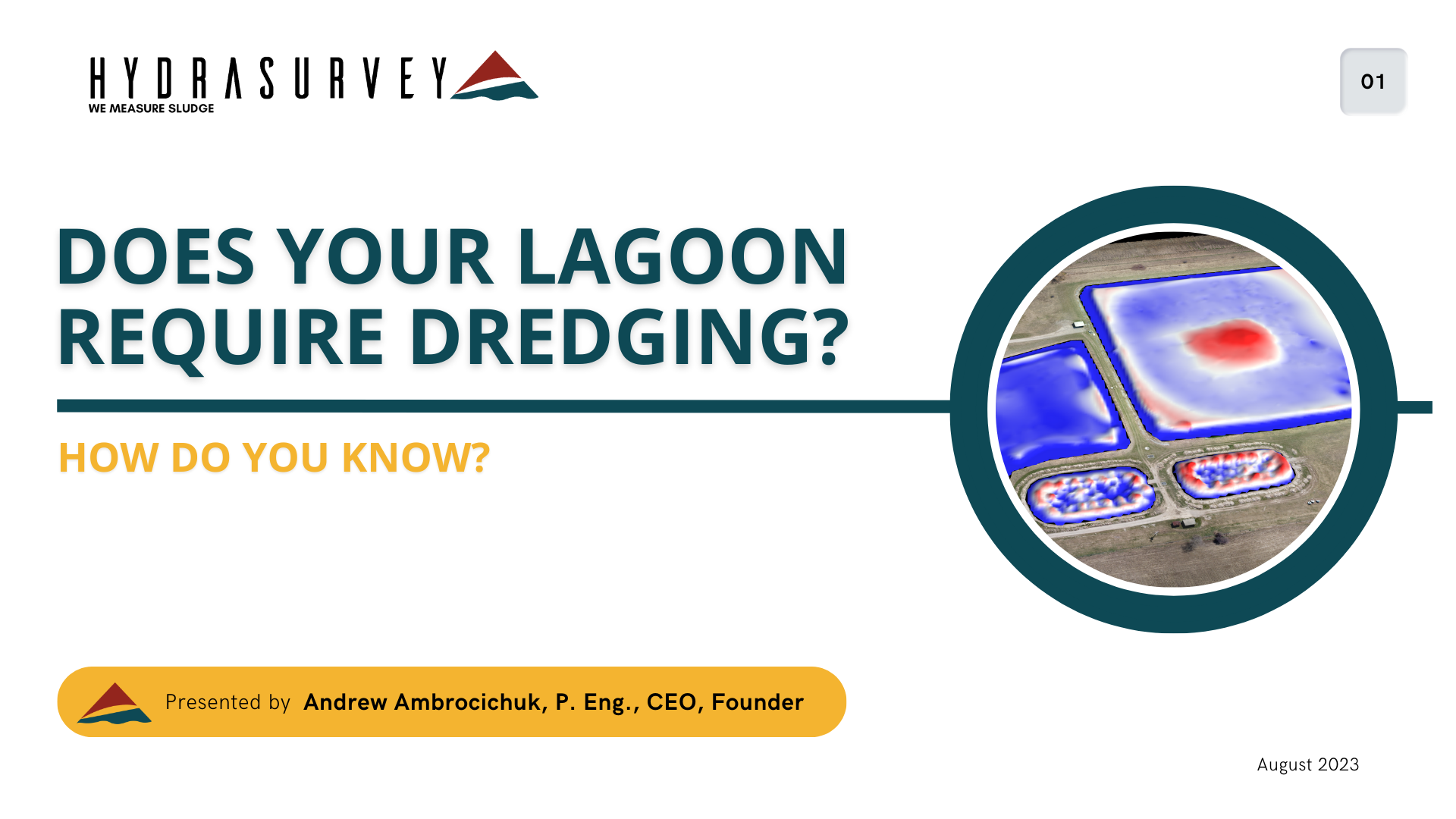
Does your Lagoon Require Dredging? Watch Andrew's Recorded Webinar to learn key factors in deciding to dredge/desludge, how inspections help determine if dredging is necessary, what disposal options are available, and the costs associated with dredging.
Video
Sludge Survey and Wastewater Project Planning
Check out this podcast of Andrew Ambrocichuk, Hydrasurvey CEO discuss entrepreneurship, sludge surveys and wastewater project planning.

Follow us on your favourite social medias for the latest trends, expert tips, and exclusive content straight from our Knowledge Center
Stay Updated on Industry Insights
Guides for Smarter Lagoon Maintainance
Don't let unexpected maintenance issues disrupt your workflow. These free PDF resources provide the insights you need to keep your wastewater lagoon in top shape.
Spring Wastewater Lagoon Checklist
This checklist will give you a snapshot of the overall condition of your lagoon and help you avoid costly surprises by identifying issues early.
5 Ways a Sludge Survey Saves You Time and Money
Learn how sludge/sediment surveys save you time and money in this free downloadable PDF.